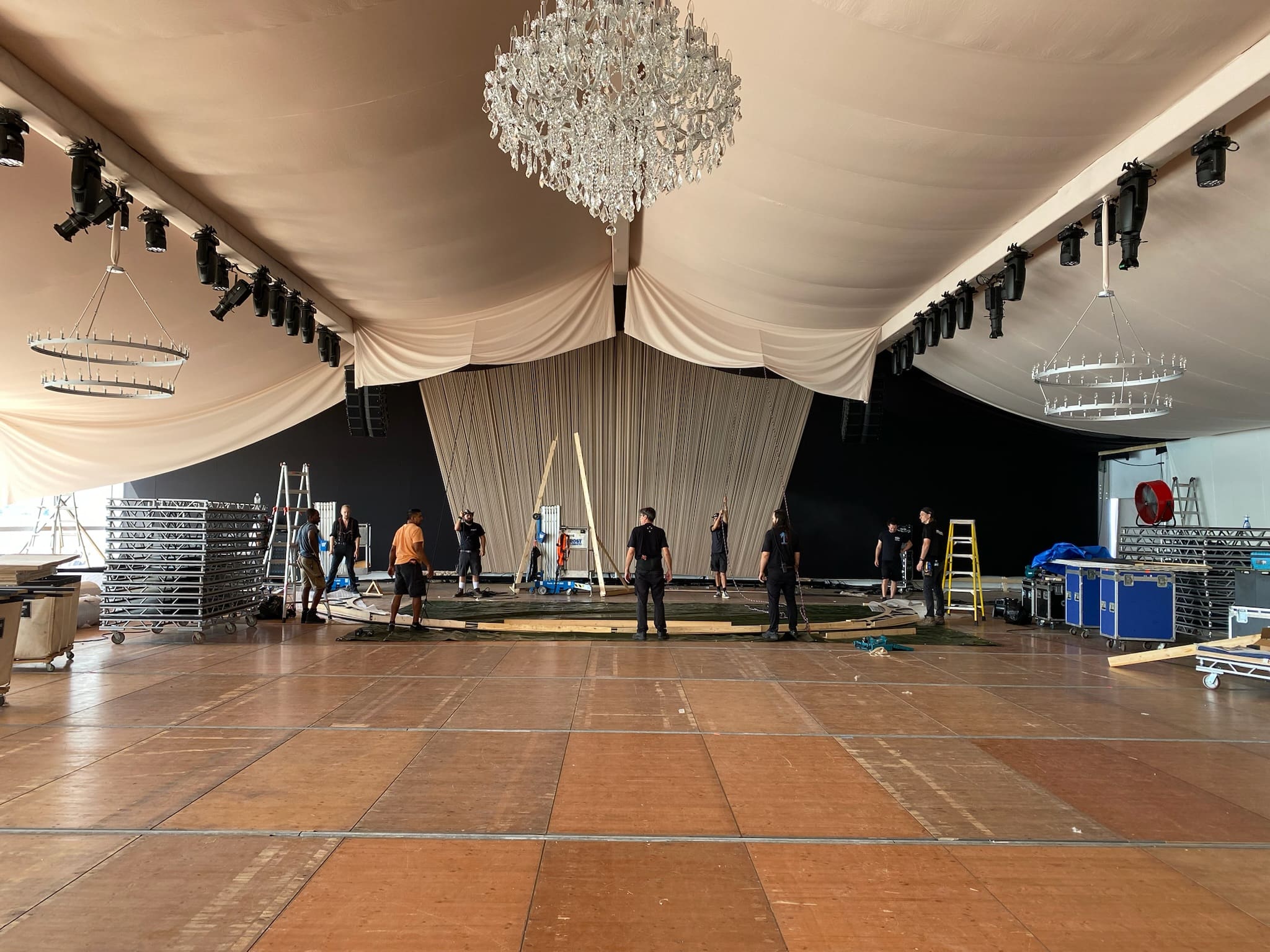
There’s a sacred window of time in every event set up—before the band has a sound check, before the florals are placed on tables, before a single guest arrives. It’s when the venue is quiet, the setup is underway, and our team conducts what we call “walkthroughs.” It’s not just a checklist; it’s a mindset. A ritual. And one of the most powerful tools we use to transform a beautiful event into an unforgettable experience.
At A Day in May Events, our walkthroughs are where intuition meets intention. We’re not just confirming placements or double-checking layouts. We’re looking for what no one else thinks to look for. We’re feeling the space. And most importantly, we’re asking: What will this feel like when it’s full of people?
Days Before: Eyes Open, Senses On
Walkthroughs often begin days before the event, once the bones of the setup are in place. Prior to departure from the venue each day we walk the space, some days with our creative partners, as if we were a guest without a map, without a guide. Is it clear where to go? Is the flow intuitive? Is there an unintentional focal point pulling attention in the wrong direction?
We notice what others miss. A table number that should be aligned with a camera angle. A production element technically out of view—but not out of the line of sight from a guest. A sliver of direct sun that will hit a table at 4:03 p.m., making one seat uncomfortably hot. These are the invisible distractions we eliminate before they exist.
Poke Holes, Then Fill Them
There’s a cadence to the questions we carry through each walkthrough. It’s never about “Is everything done?”—it’s about Is everything working?
Some of the things we ask ourselves include:
- Where does the eye land first?
- Are there any unexpected changes to traffic patterns caused by changing weather?
- Are there shadows where there should be softness?
- Is audio appropriately distributed throughout all spaces?
- Are the main installations supported from all viewing angles?
- Is there enough time, and space, for every transition we’ve scripted?
- Does the lighting shift support the emotional flow of the evening?
- Are there sensory interruptions—like scent, wind, or noise—we haven’t planned for?
- Can every guest move through this event without needing to ask for help?
- And most importantly: Is there anything here that could distract from the emotion we’re trying to create?
Choreographing Movement, Not Just Moments
A successful event doesn’t just look beautiful—it moves beautifully. That means thinking about guest circulation like a choreographer. Will guests naturally pause under the pergola because of the way it’s lit? Will the escort card table slow them down long enough to appreciate the detail, but not so long that it creates a bottleneck? Every walkway, cue, and transition is carefully considered.
We believe flow should feel effortless. And that means every step must be designed in advance.
Seeing Like a Guest, Thinking Like a Director
The key to our walkthrough process is the dual lens we bring to it: empathy and precision, as well as guest and creative partner. We see the event through the eyes of the guest—wonder, confusion, delight, overwhelm. We see the event through the eyes of our creative partners- opportunities, challenges, streamline, chaos- and then we switch roles, thinking like a director managing a live performance. We mark cues. We edit scenes. We rewrite transitions that don’t serve the story.
It’s not about micromanaging. It’s about stewardship. Guiding the experience without being seen. Anticipating a guest’s next thought and ensuring that, when they think it, their needs are already met. Additionally we anticipate the creative teams movements and actions so that they can execute based on their intuition and learned experience.
Greatness Is Crafted, Not Coincidental
The walkthroughs aren’t glamorous. They are filled with fast decisions and last-minute pivots. But it’s one of the most crucial parts of what we do onsite. Because it’s in this quiet space—before the guests arrive, before the story begins—that we make the decisions that allow the celebration to unfold with grace and intention.
We believe that the best events feel effortless. But behind that ease is an intensity few people ever see. We see it. We walk it. And that’s what makes the magic feel real.
leave a comment